Electrical problems
Circuit breaker keeps tripping
A breaker trips on overload or a short. Repeatedly resetting one that will not stay in is how switchboards catch fire.
- 5.0 on Google
- 24/7 emergency callout
- Licence 82270
First, work out which device actually tripped
A circuit breaker that keeps tripping is telling you one of two things: the circuit is carrying more current than the cable is rated for, or there is a genuine fault in the wiring or in something plugged into it. Open the switchboard door and look at which switch is sitting down. A breaker and a safety switch are different devices, and they trip for different reasons.
A circuit breaker is a plain switch with a rating printed on it and no test button. It protects the cable against overload and short circuits. A safety switch has a small test button marked T or TEST, and it trips on current leaking to earth, which is the fault that shocks people. If the tripped device has a test button, you are chasing earth leakage and our safety switch page is the one you want. No test button, keep reading.
The isolate and reset method, in order
- Switch off and unplug everything on the dead circuit. Kettle, toaster, microwave, air conditioner, pool pump, shed gear, the lot.
- Push the breaker firmly all the way down first, then up. A half flicked breaker will not reset, and people often think the board is dead when it is not.
- If it holds with nothing connected, plug items back in one at a time and give each one a minute of running. The appliance that drops the breaker is your culprit.
- If it trips straight back with everything unplugged, stop there. That is a fault in the fixed wiring, and it needs a licensed electrician, not another go at the switch.
What it usually turns out to be
Overload is the most common answer by a long way. Older homes around Port Douglas and Craiglie were wired for a very different set of appliances. Then a split system, a pool pump or a second fridge got added to a circuit that was already close to its limit. The tell is timing. A breaker that runs fine for ten or twenty minutes and then lets go is almost always thermal overload. A breaker that trips the instant you push it up is usually a short or a damaged cable.
Then there is what the tropics do to electrical work. Ants and geckos nesting inside outdoor enclosures cause a lot of tripping up here, especially in pool equipment boxes, shed boards and garden light fittings. Salt air eats terminals on the coastal side of a house. Wet season water gets into outdoor power points and pump isolators. After a big blow, damaged cabling and flooded gear will trip a breaker every time you try it. Failing appliances are next: element faults in ovens and hot water systems, and pool pump motors on their way out.
Sometimes the honest answer is that the board is simply full. If there is no spare way to split an overloaded circuit, or the board is a crowded mix of old and new gear, a switchboard upgrade is what actually fixes it rather than another repair.
What not to do
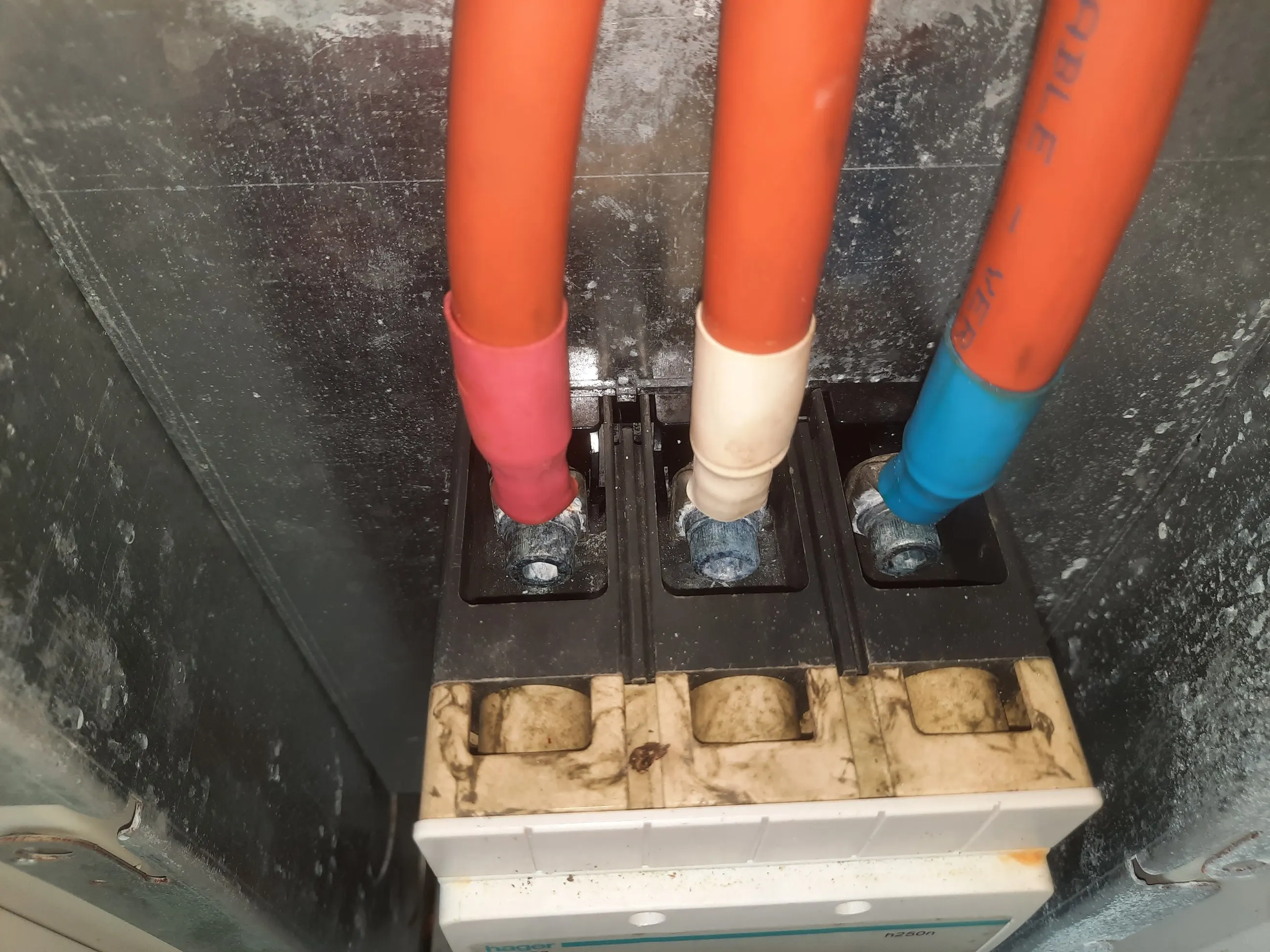
Do not keep resetting it. The breaker is doing its job, and every reset re-energises the fault. Where the cause is a loose or corroded connection, you are arcing at the terminal over and over. That builds heat in a cable you cannot see inside a wall or roof space, and that is a fire risk. Never tape, wedge or hold a breaker in. Never fit a larger breaker to make the tripping stop. The breaker size is chosen to protect the cable, so upsizing it just makes the cable the weakest part instead. If the board is warm to touch, buzzing, or there is any burning smell, switch the main switch off and ring us.
What we do when we get there
We take a load reading with a clamp meter while the circuit is working, then insulation resistance test the wiring to separate an overload from a genuine fault. From there it is a matter of splitting the circuit down, joint by joint and fitting by fitting, until the fault shows itself. Under Queensland law, testing and fault locating is energised electrical work. That is why it is not a job to attempt yourself. If the repair involves new installation work we issue a Certificate of Testing and Compliance for it, and if the board is out of room we will tell you plainly rather than patching it again. More on the process is on our fault finding page. If the power is off now, we run a 24 hour emergency service, every day.
Sources: WorkSafe Queensland, testing is energised electrical work; Certificates of Compliance; Electrical Safety Office, safety switches.
Straight answers
Circuit breaker keeps tripping: your questions
How do I tell a circuit breaker from a safety switch on my switchboard?
Look for a test button. A safety switch has a small button marked T or TEST on the face of it, because it is meant to be tested regularly. A circuit breaker has no test button at all, just a switch and a rating printed on it such as 16A or 20A. Many newer boards use combination devices that do both jobs, and those still have the test button. If you are not sure, take a photo of the board on your phone and send it through with your call.
Is it safe to keep resetting the breaker until an electrician can get there?
One reset is reasonable, especially after you have unplugged everything on that circuit. Repeatedly resetting a breaker that keeps letting go is not safe. Each reset puts power back onto a fault, and where that fault is a loose or corroded connection you are arcing at a terminal and heating a cable you cannot see. Leave the breaker off, leave that circuit dead, and use another circuit in the meantime. If the switchboard is warm, buzzing or smells of burning, switch the main switch off and ring us straight away.
Can I fix this myself, or fit a bigger breaker so it stops tripping?
Work inside a switchboard is licensed electrical work in Queensland, and fitting a larger breaker is genuinely dangerous rather than just a paperwork issue. The breaker size is matched to the cable behind it, so upsizing it means the cable becomes the part that overheats first, inside a wall or roof space where nobody will notice until there is smoke. What you can safely do is unplug appliances, reset once, and identify which appliance drops it. That information saves us time when we arrive.
What does it cost to find out why a breaker keeps tripping?
Finding out why a breaker keeps tripping is charged on our attendance and rate structure, which we set out over the phone before we book. We diagnose the fault first, then tell you what the repair involves and what it will cost before we carry it out. We do not quote fault finding sight unseen, because a failing appliance found in the first ten minutes and a buried cable fault across a large house are very different jobs. Larger work such as a switchboard upgrade is quoted in writing. Ring us and we will talk you through it.
Other things that go wrong
Common electrical problems in the Douglas Shire
Circuit breaker keeps tripping? We will find the actual cause.
Leave us a number and we will ring you back, or send the whole job through and we will quote it.