Electrical problems
Globes and downlights keep blowing
Globes that fail repeatedly in the same fitting are telling you something. Usually it is heat, a loose connection or the wrong driver.
- 5.0 on Google
- 24/7 emergency callout
- Licence 82270
First, work out whether it is one fitting or the whole house
If the same light fitting has eaten two or three globes and the rest of the house is fine, the globes are not the problem. Something in that fitting, or in the wiring behind it, is running hot, arcing or shaking. It will keep killing globes until someone fixes the cause.
Before you do anything else, check three things. First, how long each globe lasted. One that dies in days points at a bad connection. One that lasts a few months points at heat. Second, that you are fitting the right globe: correct base, correct wattage for the fitting, and a dimmable globe if it is on a dimmer. A non-dimmable LED on a dimmer will flicker and fail early. Third, the dead globe itself. Black scorching around the base or on the lampholder contacts is heat and arcing, not a dud globe.
If globes started blowing all over the house at once, stop there. That pattern usually means a supply problem rather than a lighting problem, most often a failing neutral, and it can take out appliances as well. Call someone rather than heading to the shops for more globes.
What it usually turns out to be
Across the lighting jobs we have run since 2020, the same handful of causes come up again and again.
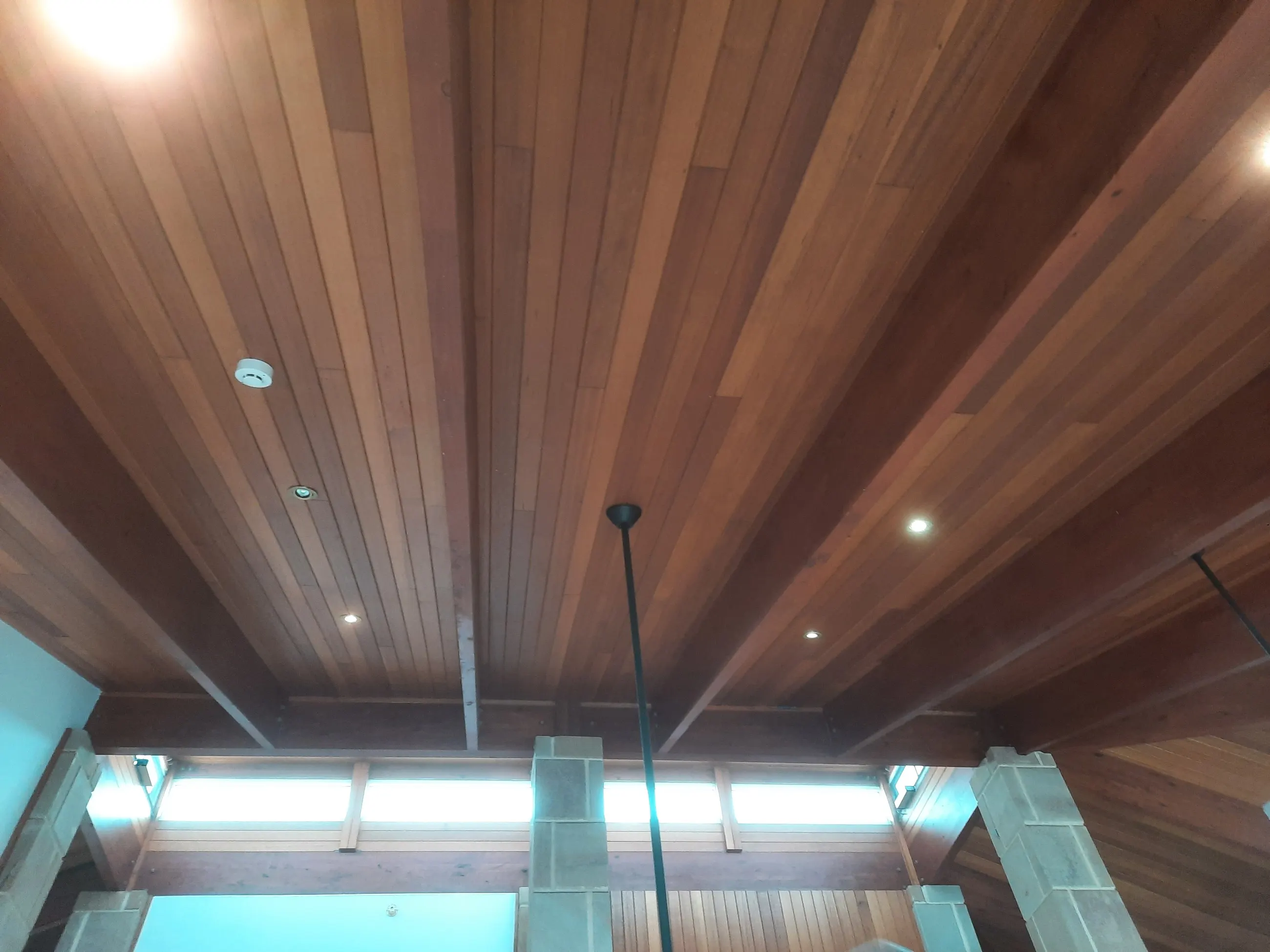
- Heat with nowhere to go. A downlight in a sealed ceiling cavity, or with batts pushed over the top of it, cooks itself. Roof spaces in Craiglie and Port Douglas sit well over 50 degrees in the afternoon, so a fitting that would survive down south will not survive here.
- A loose connection arcing. A terminal screw that was never quite tight, or one that has worked loose through years of heating and cooling, arcs every time the light is switched on. That kills globes fast and leaves brown marks, a buzz or a hot plastic smell.
- The wrong or a cheap LED driver. Mismatched and no-name drivers fail early, and wet season humidity in a hot roof finishes them off. If the light flickers before it dies, suspect the driver rather than the globe.
- Vibration. Light kits under ceiling fans shake globes and cheap LED boards apart. So do fittings on a bouncy upstairs floor.
- Tired lampholders. Old brass batten holder contacts lose their spring tension, and salt air near the coast does not help. A globe sitting loose in a worn holder arcs at the contact.
What not to do
Do not fit a bigger globe to cure a dim light in a sealed fitting. You are only adding heat to a fitting that already cannot shed it. Do not pull insulation away from downlights and leave it heaped alongside, and do not push it back over them either. Do not keep re-globing a fitting that buzzes, smells hot or has browning around the lampholder, because that is an active arc in a timber roof space. Do not poke around inside a fitting with only the light switch off. Switching off at the switchboard is the minimum, and under Queensland law testing to locate a fault is energised electrical work for a licensed electrician.
What we do when we get there
We isolate the circuit, drop the fitting and look at the terminations, the lampholder and the driver for heat damage. We measure voltage at the fitting and check the neutral. We confirm clearances, whether the fitting is rated to be covered by insulation, and whether the dimmer and driver are compatible. If a whole circuit looks suspect we isolate and test it properly rather than guess.
Often the honest answer is that the fitting has had its day, and a sealed LED unit rated for insulation contact will outlast another year of globes. We will tell you which way we would go before we start. More on how we handle lighting work, or if a circuit is tripping as well, fault finding is the place to start.
Sources: WorkSafe Queensland, testing and energised electrical work.
Straight answers
Globes keep blowing: your questions
Can I just keep changing the globe myself?
Changing a globe is a normal householder job and nobody expects you to call an electrician for it. The rule we use is three strikes. If the same fitting has taken three globes in a year while every other light in the house is fine, replacing the fourth is money down the drain. If the cause is a loose arcing connection, it is a real fire risk in the roof space. At that point the fitting needs to come down and be looked at properly.
What does it cost to sort out a light that keeps blowing globes?
A light that keeps blowing globes is priced once we have looked at the fitting. The job varies from a lampholder swap to replacing a run of downlights that were never suited to an insulated ceiling, so we do not publish rates. We tell you what we have found and give you the price before we start the repair. If it turns out to be a batch of downlights or a full room, you get a written quote rather than a running tally. Ring the workshop on (07) 4099 3497 and we will book a look.
Is insulation over my downlights actually dangerous?
It depends entirely on the fitting. Some LED downlights are built and rated to be covered by insulation. Plenty of older ones are not, including every halogen downlight ever fitted. When insulation sits over a fitting that cannot handle it, the heat has nowhere to go, so globes and drivers fail early and the fitting itself can char the material around it. If insulation has been blown in since the lights went in, get someone to put their head in the roof and check what is up there.
Why did lights blow all through the house at the same time?
Simultaneous failures across separate rooms are not a globe problem or a fitting problem. The usual cause is a supply fault, most often a failing neutral connection, which lets the voltage on some circuits climb well above normal. Globes and LED drivers go first, and appliances can follow. Turn off what you can, leave the rest alone and get an electrician out. We run a 24-hour callout every day of the year for exactly this sort of thing.
Other things that go wrong
Common electrical problems in the Douglas Shire
Globes keep blowing? We will find the actual cause.
Leave us a number and we will ring you back, or send the whole job through and we will quote it.