Advice · Lighting
What you actually save by getting rid of halogen downlights
The energy saving is the reason most people finally do it. The heat is the better reason, and in a tropical ceiling it is the one that should get you off the couch.
Do the sum in watts, not dollars
A typical halogen downlight draws about 55W. The LED that replaces it draws about 10W and puts out as much usable light.
Twenty of them is the difference between 1,100W and 200W, so you are saving 900W whenever the lights are on. Run them four hours a night and that is 3.6kWh a day, or a bit over 1,300kWh a year, from one afternoon's work.
Multiply that by whatever you are paying per kilowatt hour on your current bill and you have your own number, which is more use than anybody else's. Count the downlights in your house first. Most people are surprised, and the ones with the most to gain are the most surprised.
They last long enough that you stop thinking about them
An LED lamp outlasts anything that came before it by a wide margin. Rated life is usually quoted between 25,000 and 50,000 hours, so at eight hours a day in a workplace that is somewhere between eight and seventeen years. Take the lower end in a hot ceiling in the tropics, because heat is what shortens them.
In a commercial building that is the larger saving and it never shows up on the power bill. It is the ladder, the labour and the after-hours access that stop being an annual line item.
The heat, which is the real argument
A halogen downlight runs hot enough to scorch what it touches. Surface temperatures well above 200°C are routinely measured on them, and the fitting is hot too. An LED runs far cooler, cool enough that the argument below stops applying. You can feel the difference standing under one.
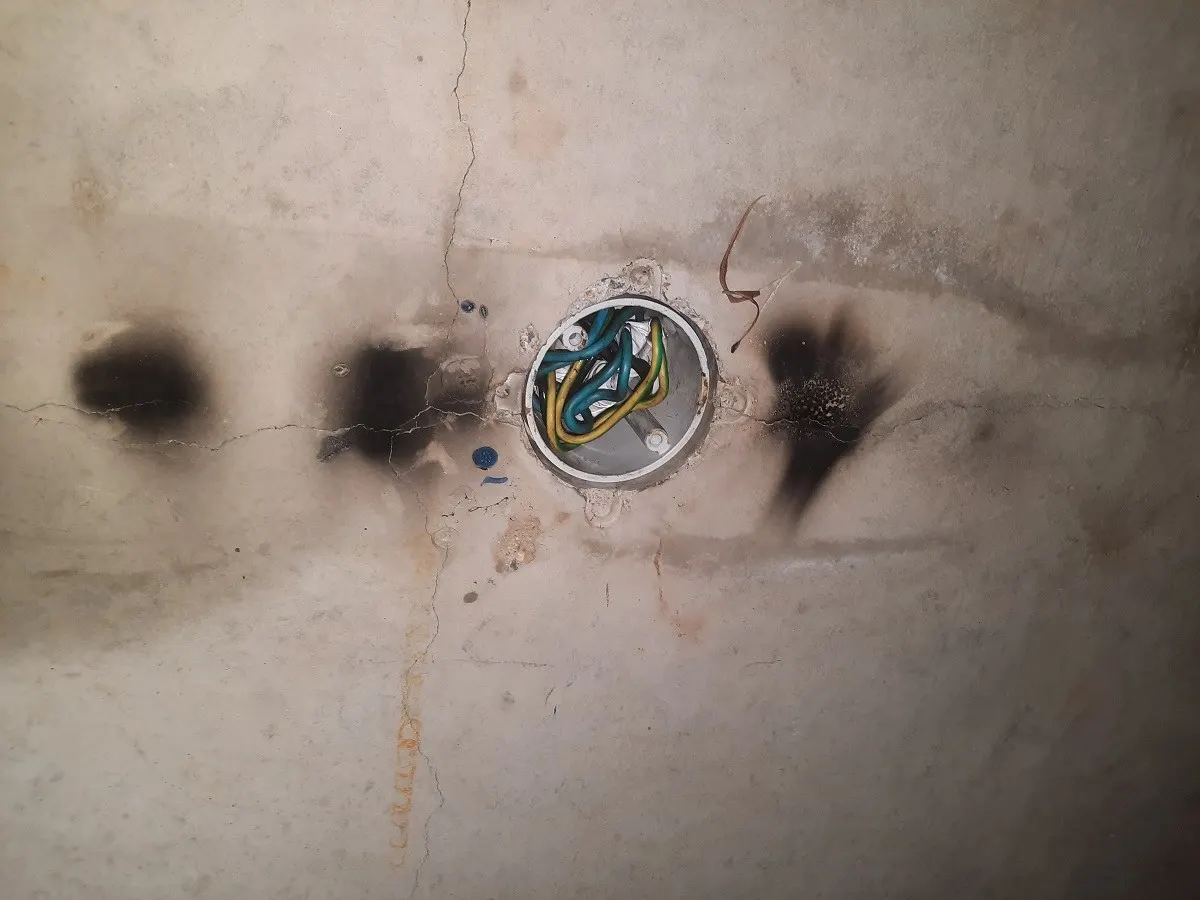
All that heat sits in your ceiling space, next to insulation, next to cabling, next to whatever the last renovation left up there. Insulation pushed hard against a fitting is the classic version, which is why the wiring rules set clearances around them, and anything that touches a lamp can scorch. A burnt cable is a short circuit and a fire. It is the part of the argument people are most often surprised by.
There is a second cost to all that heat. Every one of those lamps is a small heater in the ceiling, and in this climate the cooling then works harder and longer to remove the heat your lighting has just added. Getting rid of halogen lowers the cooling load as well as the lighting load.
Two things people do not expect
- Nothing nasty in them. Fluorescent tubes and compact fluorescent lamps contain mercury, which is why they are not supposed to go in a household bin. Halogen does not and neither does LED, but an LED lamp is still electronics, so it belongs at a collection point, not in the rubbish.
- They are gentler on what they light. Fading is caused by ultraviolet and by visible light rather than by the heat of the lamp, and LEDs put out very little ultraviolet, so they are kinder to artwork and fabric than the lamps they replace. In some houses that is the deciding factor on its own.
Is it worth it?
There is an outlay to replace a houseful of halogens. But the payback period is short, and it shortens with every increase in the price of electricity and every improvement in the lamps.
The honest answer for most houses in the Douglas Shire is that the power saving pays for it eventually and the heat is why you should not wait for eventually.
Rewritten from “6 Benefits of Upgrading to LED Lighting”, published on the BH Electrics blog in August 2020. The original quoted annual dollar figures at 2020 tariffs; this version publishes the watts so the arithmetic still works whatever the tariff is when you read it.
The work behind this
What we do about it
Straight answers
Questions people ask about this
How much does it cost to run a halogen downlight compared with an LED?
A halogen downlight draws about 55W against roughly 10W for the LED that replaces it. Twenty halogens is 1,100W; twenty LEDs is 200W, so you save 900W while the lights are on. At four hours a night that is 3.6kWh a day and a bit over 1,300kWh a year. Multiply by the rate on your own bill for a figure that means something, since tariffs change and published dollar estimates go stale quickly.
Are halogen downlights a fire risk?
They run hot enough to scorch what touches them, and far hotter than the LED that replaces them. That heat sits in the ceiling space alongside insulation and cabling, which is why the wiring rules require clearances around the fittings. Burnt cable insulation means a short circuit and a possible fire. It is the strongest reason to replace them, and it has nothing to do with the power bill.
Do LED downlights reduce cooling costs?
Indirectly, yes, and it is worth counting in the tropics. Every halogen lamp is a small heater sitting in your ceiling, and the cooling then has to remove the heat it adds. Replacing them lowers the lighting load and the cooling load at the same time.
Can I replace halogen downlights myself?
Changing a lamp of the same type is one thing; converting a halogen fitting to LED is another. It commonly involves the fitting, the transformer and sometimes the wiring at the fitting, which is licensed electrical work. It is also the moment somebody looks at what is actually in your ceiling space, which after twenty years of halogen heat is worth having done properly.
More advice
Other things worth knowing
Where we have done it
Jobs that used this work
Need a licensed electrician who turns up?
Leave us a number and we will ring you back, or send the whole job through and we will quote it.